
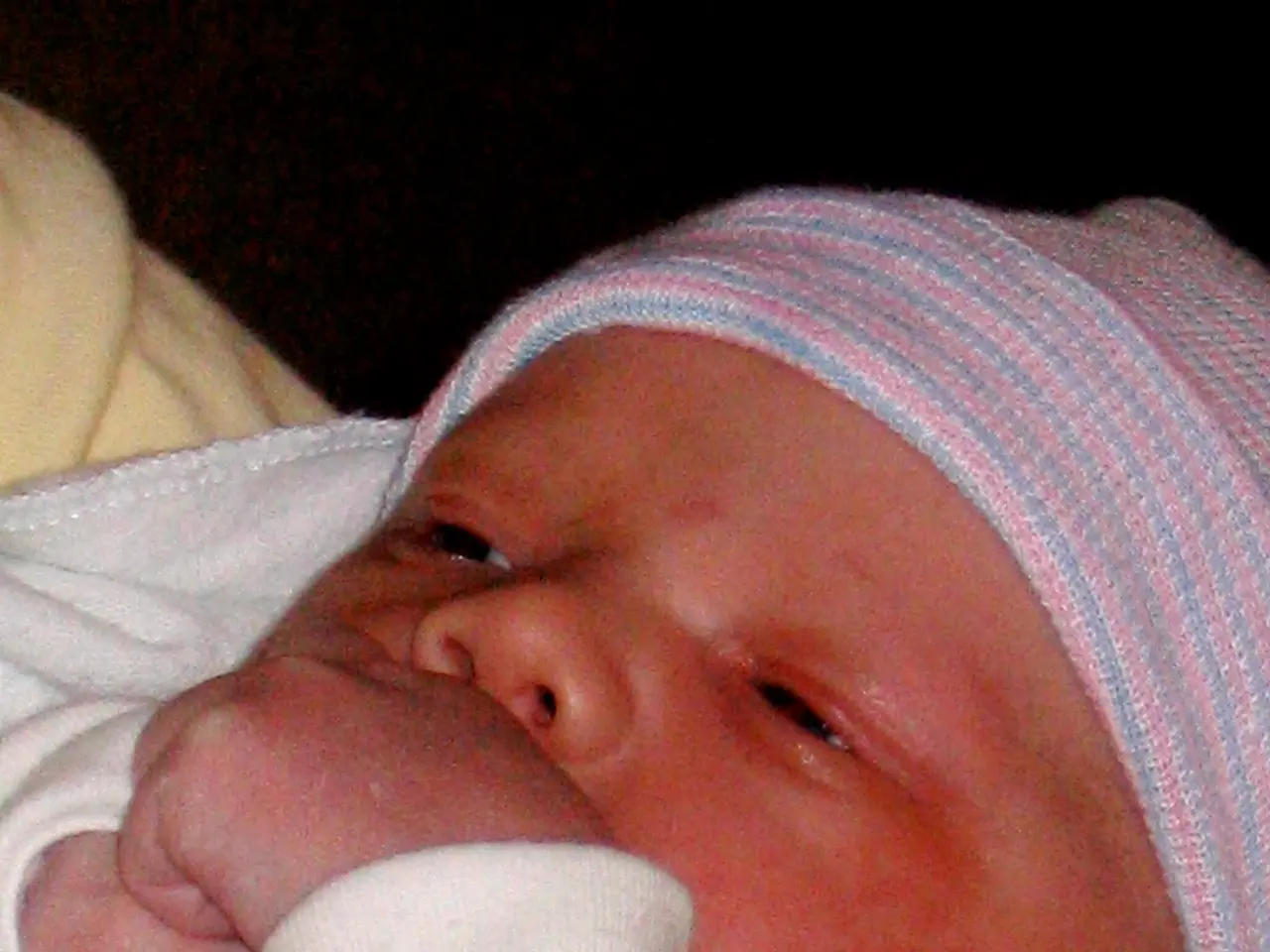
Newborn Infection: Causes, Signs, and Remedies
Neonatal sepsis is a serious bloodstream infection that affects newborns, primarily caused by bacteria transmitted before, during, or after birth. This infection can have severe consequences if not promptly diagnosed and treated.
Causes
Neonatal sepsis can be categorised into early-onset (within the first 72 hours after birth) and late-onset (after 72 hours).
Early-onset sepsis is usually due to bacterial transmission from the mother, such as Group B Streptococcus or Escherichia coli.
Late-onset sepsis, on the other hand, is often caused by bacteria from the newborn's environment, including coagulase-negative staphylococci and other hospital-acquired pathogens.
Symptoms
Newborns with sepsis may show various symptoms, including respiratory distress, refusal to feed or poor feeding, fast heart rate or weak pulse, fast breathing or shortness of breath, skin changes such as cold, blotchy, or jaundice (yellowing of skin or eyes), behavioural changes like lethargy, seeming confused, or seizures, signs of shock, extreme pain, or discomfort, dehydration signs, and changes in the body or behaviour/appearance.
Treatment
Treatment for neonatal sepsis typically involves empiric antibiotic therapy, supportive care, diagnostic testing, and special considerations. Empiric antibiotic therapy usually starts with intravenous ampicillin plus gentamicin and/or cefotaxime, tailored based on age, suspected infection source, and risk factors. Supportive care includes cardiovascular support with IV fluids and respiratory assistance as needed. Diagnostic testing involves blood cultures, cerebrospinal fluid analysis, and other labs to identify the causative organism and guide narrowing of antibiotic regimens. Special considerations include infectious disease consultation for resistant or atypical pathogens, treatment duration depending on the causative organism and site of infection, and prevention measures such as screening and treatment of maternal infections and infection control in healthcare settings to reduce late-onset infections.
Prevention
Preventive measures for neonatal sepsis include prenatal care, immunization, hand washing, keeping sick people away from the baby, extra care for infants in nurseries or intensive care units, precaution, and education.
Neonatal sepsis requires urgent hospital management to reduce the risk of serious complications, including organ failure and long-term neurological damage. The mortality rate of neonatal sepsis has increased over the past two decades, highlighting the importance of thorough knowledge of this disease and timely medical intervention to save lives.
[1] Neonatal Sepsis. (2021). In UpToDate. [2] Neonatal Sepsis. (2021). In National Organization for Rare Disorders (NORD). [3] Neonatal sepsis. (2021). In BMJ Best Practice. [4] Neonatal sepsis. (2020). In British Journal of Clinical Pharmacology. [5] Neonatal sepsis. (2021). In Merck Manual Professional Version.
- Pregnancy and proper prenatal care are vital for preventing neonatal sepsis.
- Science has made significant strides in understanding the causes of neonatal sepsis and developing effective treatments.
- Early-onset sepsis, occurring within the first 72 hours, is primarily caused by bacteria transmitted from the mother during pregnancy or childbirth.
- Type-2 diabetes, a chronic disease, can complicate pregnancy and increase the risk of neonatal sepsis.
- Medical-conditions such as chronic kidney disease and respiratory conditions can also increase the risk of neonatal sepsis.
- Eye-health is crucial for early detection of symptoms of sepsis in newborns, as changes in the skin may be apparent early.
- Health-and-wellness practices during pregnancy can help reduce the risk of neonatal sepsis and other complications.
- Climate-change can affect the incidence of neonatal sepsis through its impact on food availability, hygiene, and healthcare infrastructure.
- The manufacturing industry has a role in preventing neonatal sepsis by ensuring stringent hygiene practices and proper sterilization of medical equipment.
- Mental-health issues in mothers can impact their ability to provide adequate care for their newborn, increasing the risk of neonatal sepsis.
- Mens-health often goes overlooked, but understanding the risks of neonatal sepsis and taking precautions during pregnancy can help protect both father and child.
- Skin-care is essential for newborns, as skin conditions can create entry points for bacteria that cause sepsis.
- Therapies-and-treatments for neonatal sepsis have come a long way, but continued research is necessary to improve outcomes and reduce complications.
- Womens-health encompasses the science of pregnancy and childbirth and plays a critical role in preventing neonatal sepsis.
- The industry must take steps to improve healthcare access and reduce disparities in order to address the increasing rate of neonatal sepsis.
- Medicare policies can impact the treatment and prevention of neonatal sepsis, as reimbursement for care can vary.
- CBD, a compound in marijuana, is being studied for its potential benefits in managing symptoms and side effects of neonatal sepsis treatment.
- Environmental-science plays a role in understanding the factors that contribute to the incidence of neonatal sepsis, such as exposure to environmental pollutants.
- Finance has a significant impact on the availability of healthcare resources and the effective treatment of neonatal sepsis.
- Energy policy and consumption can impact the availability of resources for disease prevention and treatment, including neonatal sepsis.
- Changes in skin conditions can serve as early warning signs of neonatal sepsis, making skin-health a critical aspect of newborn care.
- Space-and-astronomy research can provide insights into the prevention and treatment of neonatal sepsis, as it is a challenge in various healthcare settings across the globe.
- Retail and transportation industries can help reduce the spread of bacteria by implementing stricter hygiene practices and promoting cleanliness.
- Cybersecurity plays a crucial role in protecting the confidentiality of medical records and ensuring timely care for newborns with neonatal sepsis.
- Lifestyle choices during pregnancy can impact the risk of neonatal sepsis, emphasizing the importance of health-conscious decisions.
- Fashion-and-beauty brands can promote skin-care and hygiene practices to reduce the risk of neonatal sepsis.
- Food-and-drink choices during pregnancy can also impact the risk of neonatal sepsis, making proper nutrition essential.
- Investing in healthcare and research can help reduce the burden of neonatal sepsis and improve outcomes for newborns.